Most buyers assume the paperwork protects them automatically. You make an offer, the seller fills out a disclosure form, and whatever is wrong with the house gets written down before you sign anything. That is how it works in a lot of states, and it is how a lot of buyers in Fountain City expect it to work here.
Tennessee actually built in a fork in the road, and the buyer is the one standing at it.
The disclosure isn't automatic. It's a choice, and it's partly yours.
Under the Tennessee Residential Property Disclosure Act, a seller of one to four unit residential property has to give the buyer one of two things: a full Residential Property Condition Disclosure statement, where the seller answers specific questions about the home's condition, or a disclaimer statement instead. The catch is what makes the disclaimer legal. A seller can only substitute the disclaimer if the buyer agrees to waive the right to the full disclosure first. The statute is direct about what that disclaimer says: the seller makes no representations or warranties, and the buyer takes the home "as is, with all defects which may exist."
That means the document meant to protect you can be skipped, but only with your own signature making it possible. Nobody hands you a blank waiver and says sign here to lose your protection. It shows up folded into a stack of forms during a fast-moving transaction, and if you sign it without understanding what it is, you have just traded the seller's obligation to answer specific questions about the house for a document that starts from the position that you are buying whatever is there, known or not.
This is not a hypothetical quirk buried in case law. It shapes what actually gets disclosed to you, and in a neighborhood like Fountain City, where the housing stock has decades of history behind it, that matters more than it would in a subdivision built five years ago.
Why the choice carries more weight in an older neighborhood
Fountain City's identity is tied to its age. Long-established streets, mature trees, and Fountain City Lake, the neighborhood's namesake duck pond, sit at the center of a community that took shape well before most current disclosure law existed. A lot of that means charm. It also means the physical realities an inspector finds are different from what shows up in newer construction on the edges of Knox County.
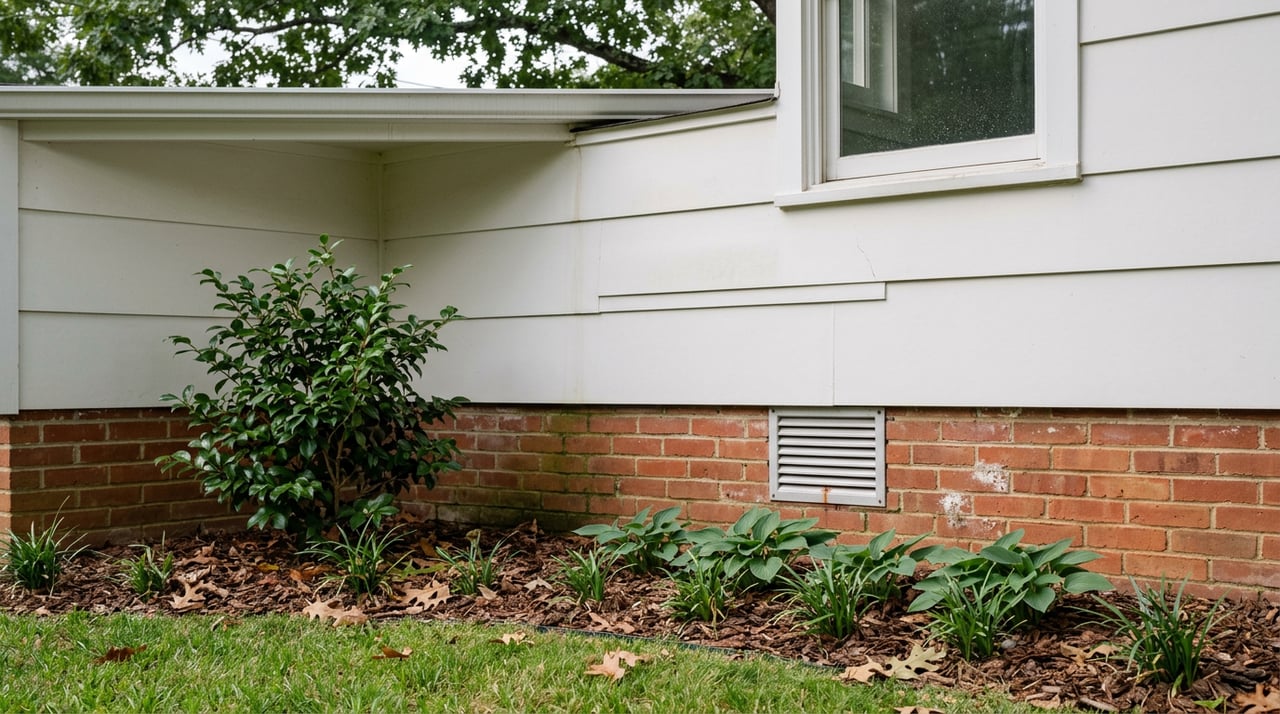
Local pest control providers who work the neighborhood point to a specific pattern: Fountain City's older homes carry crawl space foundations, aging wood components, and years of moisture exposure, a combination that subterranean termites favor, and the creeks and green space running through the area keep soil moisture elevated across the neighborhood year-round. Inspectors look for mud tubes along foundation walls, piers, or framing, along with carpenter ant activity in aging wood trim and window frames. None of that is unique to any one street. It is a neighborhood-wide condition tied directly to the age of the housing stock and its proximity to water.
That is exactly the kind of thing a full disclosure statement is supposed to surface, if the seller knows about it and answers honestly. A disclaimer doesn't ask the question at all.
What else tends to surface once the inspector is inside
Termites are only part of the picture. East Tennessee inspectors working in older Knoxville-area neighborhoods routinely flag electrical panels from manufacturers like Federal Pacific or Zinsco, both associated with known fire hazard concerns, along with wiring that predates modern code. Homes built before 1975 commonly still have galvanized steel supply lines, which corrode from the inside over decades and gradually restrict water flow even when nothing looks wrong from outside the wall. Attic insulation in homes built before the 1990s frequently falls short of what current standards recommend, which shows up as an HVAC performance issue before anyone realizes the insulation is the actual cause.
Radon deserves its own mention because it will not announce itself through a walk-through. Roughly 30 percent of homes tested in the East Tennessee region come back above the EPA's action level, which is why a radon test, not just a general inspection, is worth requesting specifically rather than assuming it is automatically included.
None of these are Fountain City-specific defects. They are regional realities that land more often in older neighborhoods, and Fountain City's age puts it squarely in that category.
The disclaimer doesn't erase everything
Even when a buyer waives the full disclosure, Tennessee law still requires sellers to answer a short list of specific questions that survive the waiver. Sellers still have to disclose the presence of an exterior injection well, the results of any percolation or soil absorption testing performed on the property, whether a home was moved from one foundation to another, the presence of a known sinkhole, whether the property sits in a Planned Unit Development, and whether a septic system permit was issued during a sewer connection moratorium. These carve-outs exist in the code separately from the general disclosure requirement, and they apply regardless of which form the seller uses.
It's a short list, and it does not cover the crawl space moisture, the electrical panel, or the galvanized plumbing that a Fountain City inspector is far more likely to find. That gap is the entire reason the waiver matters as much as it does. Sign it thinking it is a formality, and you have narrowed what the seller is legally required to tell you down to six specific items, none of which touch the issues most common in a home this age.
There is also a real limit on how long you have to act if something surfaces later. Claims tied to a misrepresentation or omission in a disclosure statement generally have to be filed within one year of receiving the disclosure or closing, whichever comes first. That is not a long runway once you are settled into a new house and dealing with everything else that comes with moving.
Turning what you find into something useful
An inspection that turns up problems is not a signal to walk away. It's information, and information is leverage. Buyers who use their inspection findings well, rather than treating the report as a pass or fail grade, have negotiated meaningfully lower purchase prices or seller-paid repairs on average, according to inspectors who work with first-time buyers across East Tennessee. That number reflects buyers who went in with a plan for what to ask for, not buyers who panicked at the first item on the list or ignored the report entirely.
Sellers are not obligated to repair anything listed on a disclosure form or an inspection report unless the purchase contract specifically requires it. That obligation has to be negotiated into the agreement. Knowing that upfront changes how you approach the inspection period. It is not a formality to get through. It is the point in the transaction where you decide what you are actually asking for, and whether the seller will agree to it.
A few questions worth settling before you're at the table
Do I have to waive my disclosure rights to buy the home? No. The waiver only happens if you agree to it. A buyer can always request the full disclosure statement rather than accepting a disclaimer, and there is no requirement to sign a waiver just because a seller offers one.
Does an as-is disclaimer mean the seller can hide known defects? No. Even under a disclaimer, sellers cannot knowingly conceal material defects, and the handful of statutory disclosures tied to injection wells, sinkholes, foundation moves, and septic permits still apply. What changes is the scope of what they are required to volunteer beyond those specific items.
Should I get a sewer scope or radon test even if the general inspection looks clean? In a neighborhood with the age profile Fountain City has, both are worth requesting specifically. Underground sewer lines in older homes have often been in service for decades, and radon testing captures something a standard walk-through inspection was never designed to measure.
Buying an older home in a neighborhood with as much character as Fountain City is worth the extra step of understanding what you are signing before you get to the closing table, not after. If you are weighing a purchase here and want a second set of eyes on what the paperwork actually says before you sign anything, Marble Key Realty has spent more than two decades working East Tennessee transactions just like this one. A conversation now costs you nothing and can save you from a signature you didn't fully understand.